
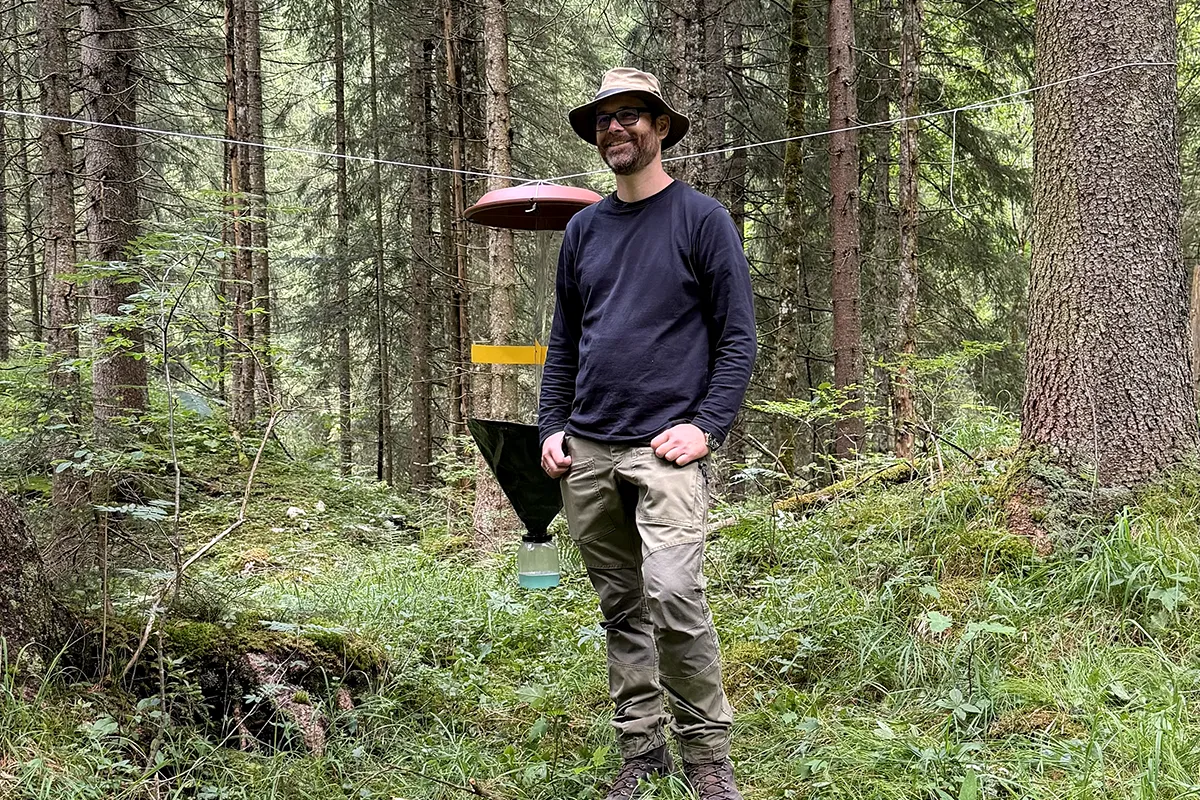
A forest where a tit is chirping, moss glistens and everything looks like something out of a fairy tale. And right in the middle of it, a camouflaged box on a tree. Look closely, and you realize there’s a little high-tech lab hiding in there.
The Salzburger Nachrichten accompanied Rupert Seidl (TUM, research lead at Berchtesgaden National Park) and his doctoral researcher Alice Peace at the foot of the Hoher Göll. Both work in the bayklif2 project BaySenseAI, which is funded by the Bavarian State Ministry of Science and the Arts. Dorina Pascher tells how the two use sensors, microphones, wildlife cameras and insect traps to track down the effects of climate change, and how Seidl went from a forester’s son on the Attersee to professor.
One sentence from the article sticks with you: “You have to imagine mountains as islands in the sea of the atmosphere.” What that means for animals and plants, and why chamois sometimes behave quite differently on hot days than you’d expect, is best read for yourself.
So: grab a coffee and read the article. The PDF of the article can be downloaded here (in German)
Salzburger Nachrichten, 5 September 2026, “Was der Bergwald über Klimawandel verrät”, by Dorina Pascher