
Leveraging Root Traits for Climate-Resilient Agriculture: Adaptive Strategies for Water Stress Tolerance
When rain fails or pours down at the wrong time, the future of our harvests is decided on Bavaria’s fields. Climate change brings increasingly fluctuating temperature and precipitation patterns, causing noticeable impacts on soil stability, nutrient availability, and crop yields.
Yet the answer to this challenge lies not only above the ground, but beneath it. The HYDROOT project turns its focus toward the hidden foundation of our crops: the root system and its interaction with the soil and its microbiome. Genomics, quantitative genetics, physiology, modelling, and state-of-the-art microbiome analyses are combined to decipher the genetic and microbial mechanisms that make plants resilient to both drought and water excess.
Roots determine how efficiently a plant absorbs water, accesses nutrients, and responds to environmental stress. At the same time, a highly complex microbial community lives in the rhizosphere – the immediate root zone. These microorganisms promote water uptake, stabilise nutrient cycles, and assist the plant in adapting to changing environmental conditions.
HYDROOT pursues a clear objective: to identify the key genetic and microbial determinants of adaptation to water stress, and to integrate this knowledge into predictive models for plant-water-microbiome interactions.
This creates the scientific foundation for the sustainable breeding of climate-resilient crops – tailored to Bavaria’s challenges in the 21st century.
Background
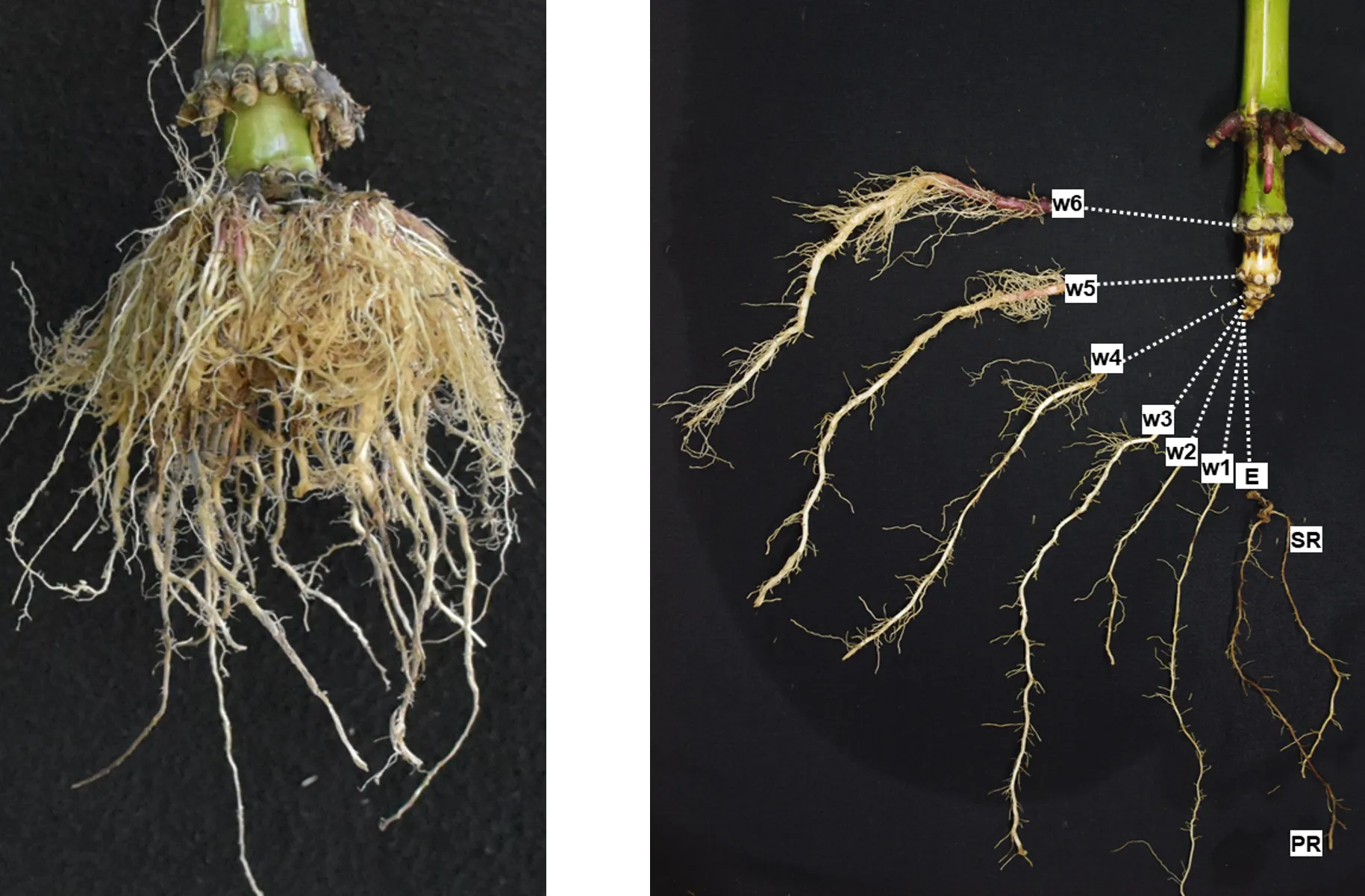
Maize is one of Bavaria’s most vital crops. Its high biomass yield, versatility, and economic viability make it a cornerstone of agricultural production. However, maize is more than what we see above the ground. Its complex root system influences the uptake and transport of water and nutrients, the plant’s carbon balance, and the structure of soil life. The root-associated microbiome, in turn, controls nutrient homeostasis, stress tolerance, and core ecosystem processes.
Despite this significance, plant research and breeding have historically focused predominantly on above-ground traits. Roots often remained invisible – partly because suitable methods for their detailed assessment were lacking for a long time. As a result, targeted selection for root and microbiome traits has played only a minor role in breeding programmes until now.
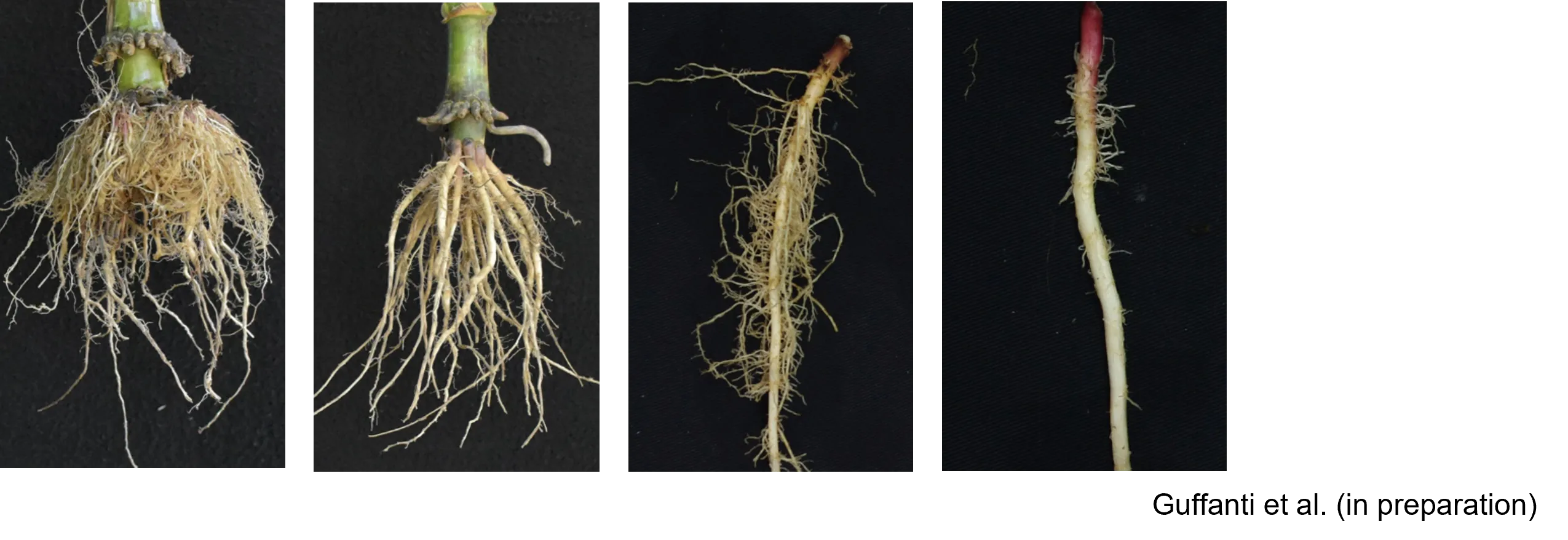
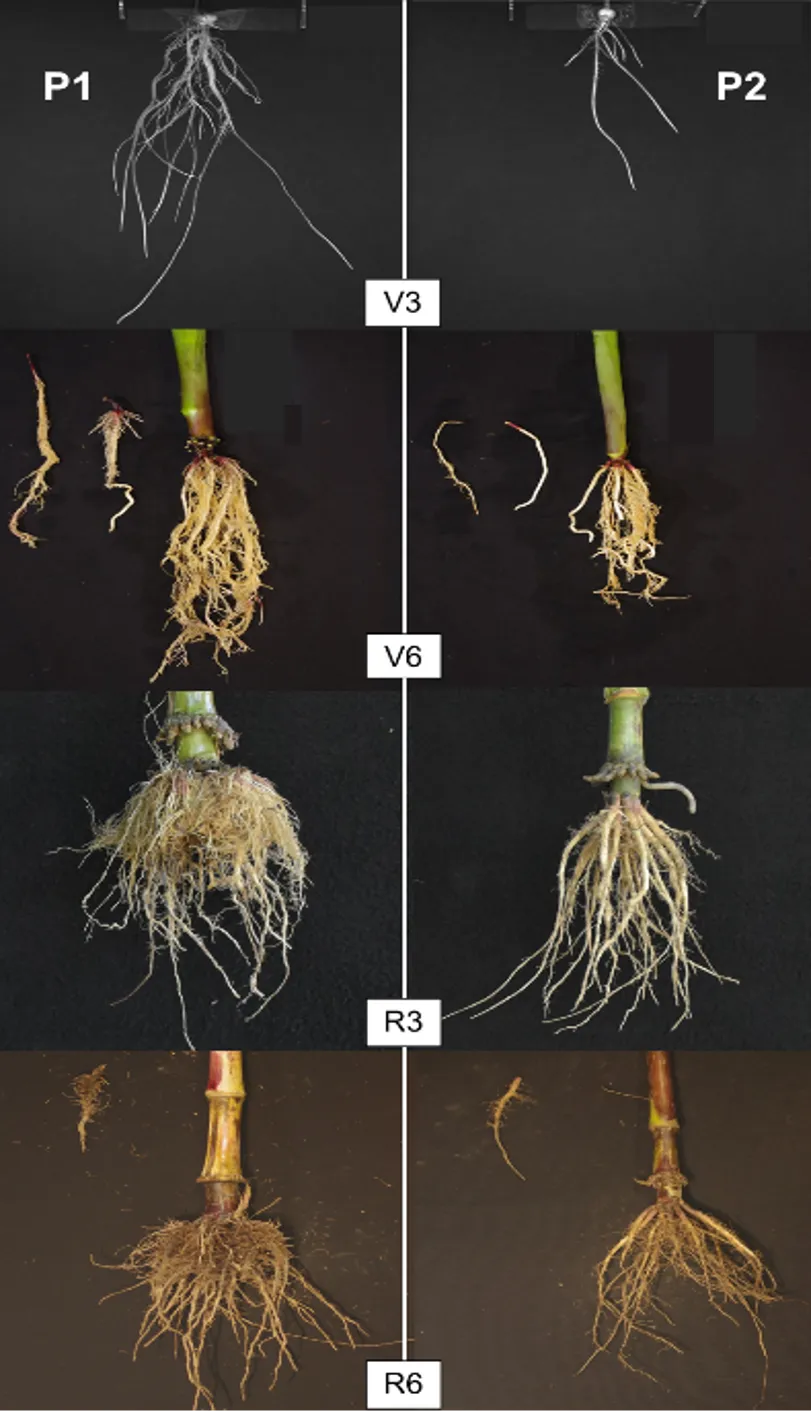
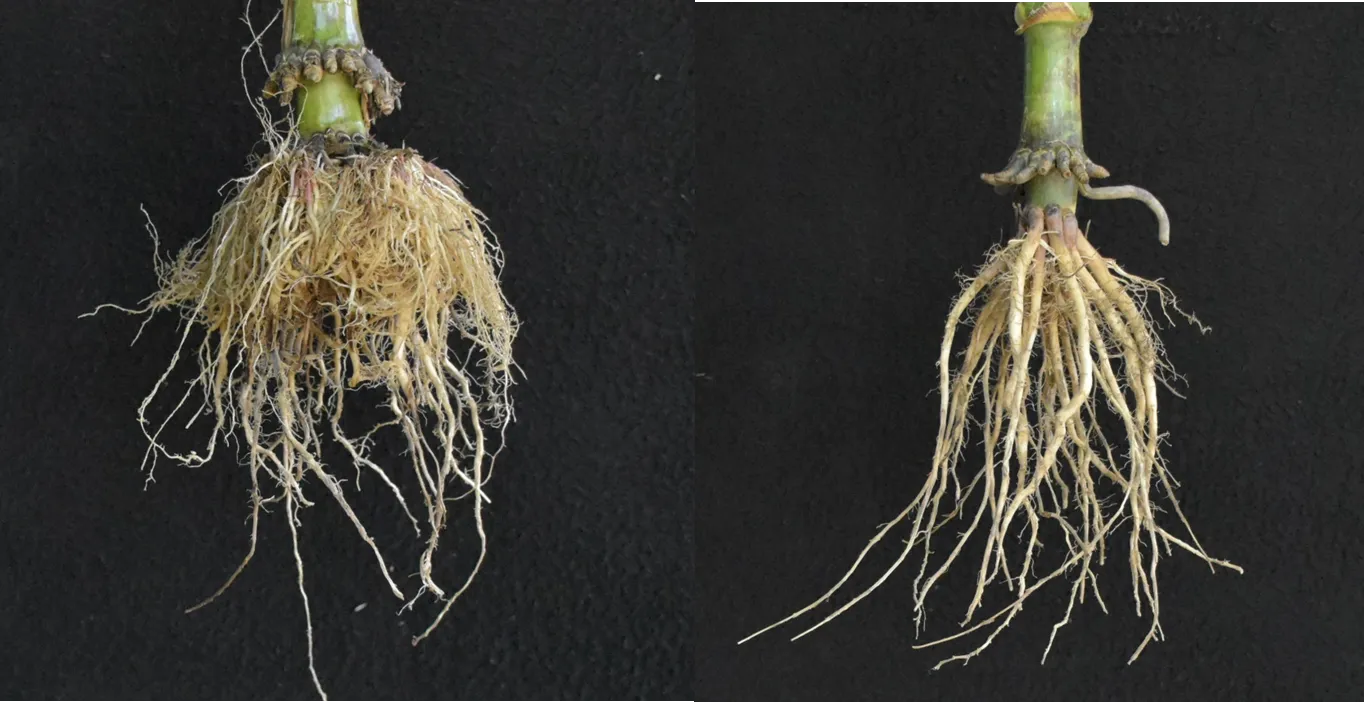
Recent technological developments are opening up innovative opportunities. In particular, double haploid lines derived from the European landrace Kemater Landmais Gelb represent a unique experimental resource. This population exhibits an exceptionally high degree of variation in root traits – an ideal baseline for identifying the genetic causes of these differences.
Based on genome sequences, transcriptome data, and comprehensive phenotyping, HYDROOT utilizes this resource to identify candidate genes for root architecture and water-stress resilience, paving new paths for plant breeding.
Methods and Goals
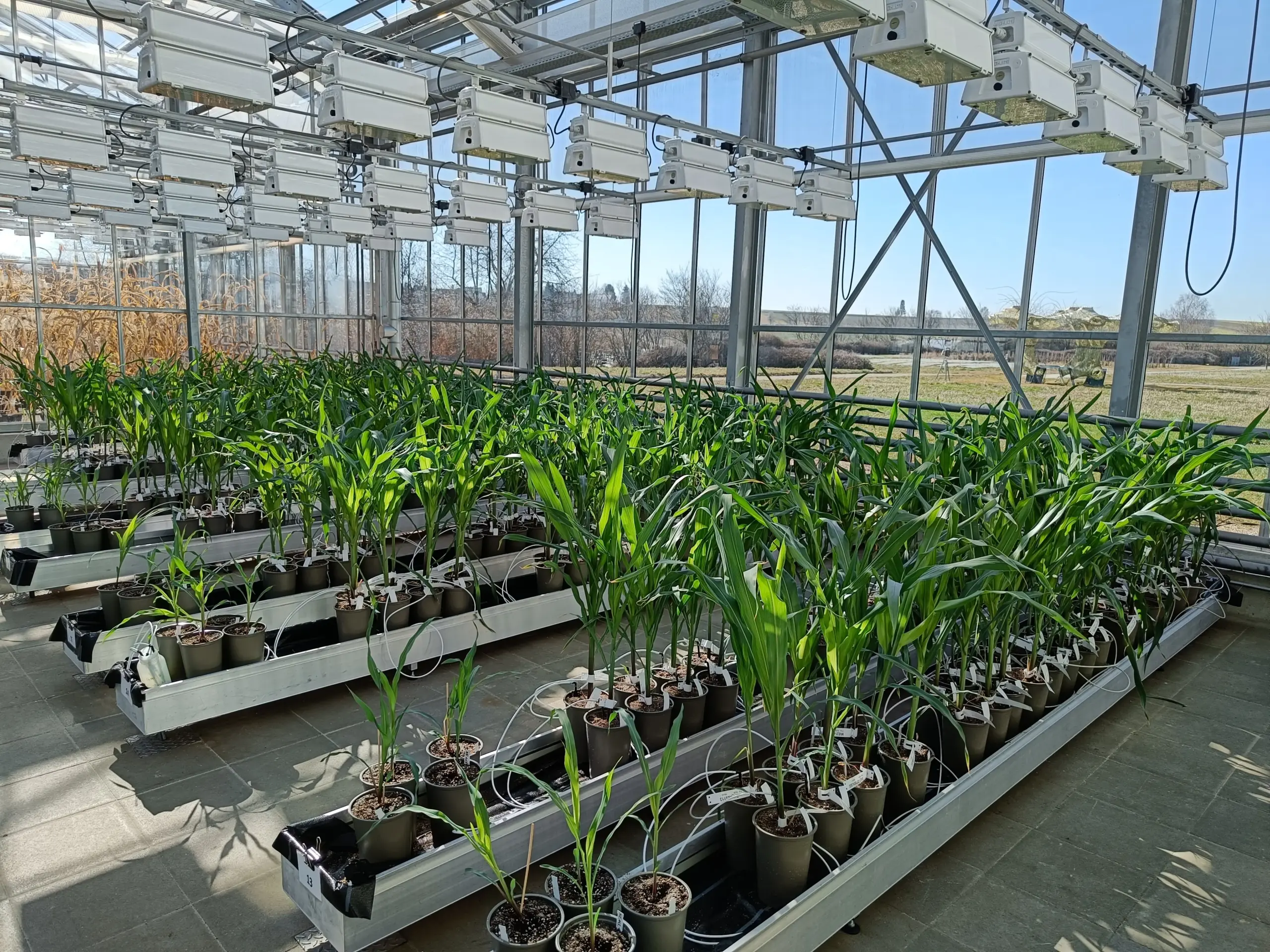
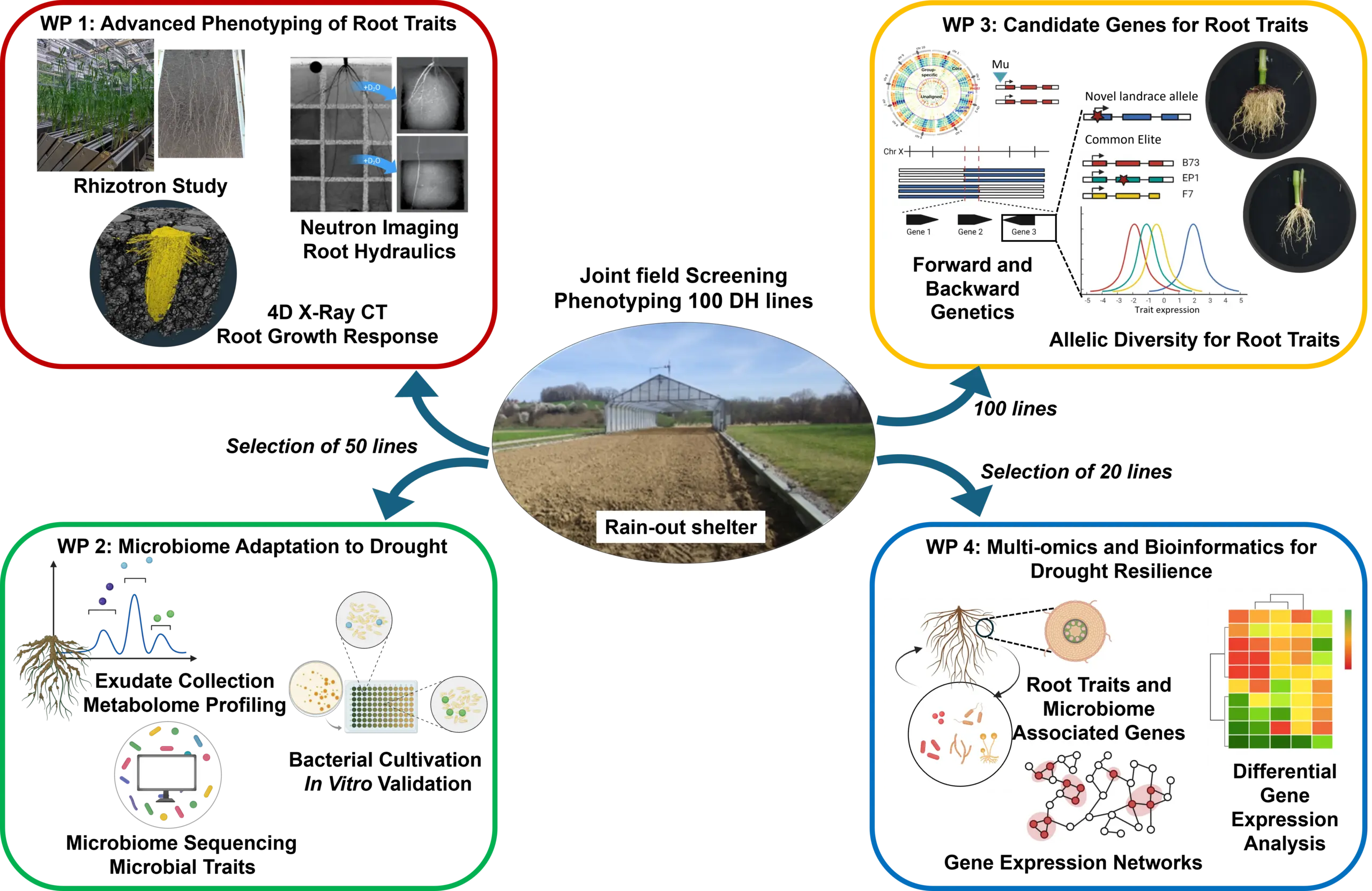
HYDROOT combines plant genetics, plant physiology, microbiome research, and computational biology into an integrative research approach. The plants are investigated both under natural field conditions and in sheltered trial plots where drought can be simulated specifically and fine tuned.
Special attention is paid to the roots:
- Modern imaging techniques allow roots to be observed in the soil without digging them up.
- This makes it possible to precisely track how they grow and how they absorb water.
Concurrently, the project investigates:
- Which microorganisms live around the roots.
- Which substances the plant releases into the soil through its roots.
- Which genes become active under drought stress.
All collected data are evaluated using advanced computational methods to recognize correlations and identify key genetic factors.
The primary goals of HYDROOT are:
- Understanding differences: Discovering how root traits and the composition of microorganisms vary between different plants – and to what extent these characteristics are heritable.
- Investigating adaptability: Understanding how flexibly roots and microorganisms react to varying amounts of water, and whether these traits can be utilized for plant breeding.
- Elucidating mechanisms: Exploring which biological processes help plants cope with drought stress.
- Identifying genetic foundations: Finding genes and genetic regions that contribute to drought resistance.
By gaining a better understanding of the interactions between plant, soil, and microorganisms, crops with specific characteristics can be developed that deliver stable yields even under increasing drought conditions. This helps to:
- Adapt agriculture to climate change
- Secure harvests in the long term
- Use resources such as water more efficiently
HYDROOT thus connects fundamental research and applied breeding research into a seamless pipeline of innovation.
Tangible Benefits for the Free State of Bavaria
Maize is a mainstay of Bavarian agriculture – serving as animal feed, energy source, and raw material for diverse applications. In light of increasing temperature fluctuations, more frequent heavy rainfall during the winter time, and intensified drought periods especially during the flowering phase, the adaptability of maize varieties is gaining immense importance.
HYDROOT delivers crucial insights for the development of new, stress-tolerant varieties. The developed methods and models enable a more targeted selection for optimal combinations of root and microbiome traits. This contributes to:
- More stable yields despite climatic extremes
- More efficient use of water and nutrients
- Resource-saving and site-adapted cultivation
- Long-term safeguarding of food supply and value creation in Bavaria
Furthermore, HYDROOT strengthens the visibility of Bavarian research in thematic fields that are highly relevant for our society. The resources, methods, and expertise established within the project will promote international collaborations and will be widely disseminated through publications, conferences, databases, as well as academic teaching and professional training programmes – including those at the Technical University of Munich (TUM).
Synergies and Perspectives
HYDROOT addresses a central lever of crop production: the optimization of the root system as a key to increased productivity, resource efficiency, and stress tolerance. The identification of genomic regions and candidate genes linked to novel root and microbiome traits opens up new opportunities for crop improvement in the medium to long term, not only in maize but potentially in other crop species as well.
The project works closely with breeding companies that provide seed multiplication and field capacities across Bavaria.
This collaboration ensures that the methods developed remain closely aligned with practical breeding needs and that breeding-relevant questions are systematically addressed.
As a result, the project bridges the gap between fundamental molecular research and agricultural application.
HYDROOT tells the story of a silent revolution beneath the ground – right where roots grow, microbes act, and the resilience of our crops is forged.
© Fabio Guffanti / TUM Plant BreedingPflanzenzüchtung
© Fabio Guffanti / TUM Plant Breeding
The team of HYDROOT
Principal Investigator

Prof. Dr. Nadia Kamal
Technical University of Munich
School of Life Sciences
Computational Plant Biology

Principal Investigator

Prof. Dr. Mutez Ahmed
Technical University of Munich
School of Life Sciences
Root-Soil Interaction
Principal Investigator

Prof. Dr. Chris-Carolin Schön
Technical University of Munich
School of Life Sciences
Plant Breeding
Principal Investigator

Prof. Dr. Peng Yu
Technical University of Munich
School of Life Sciences
Plant Genetics