
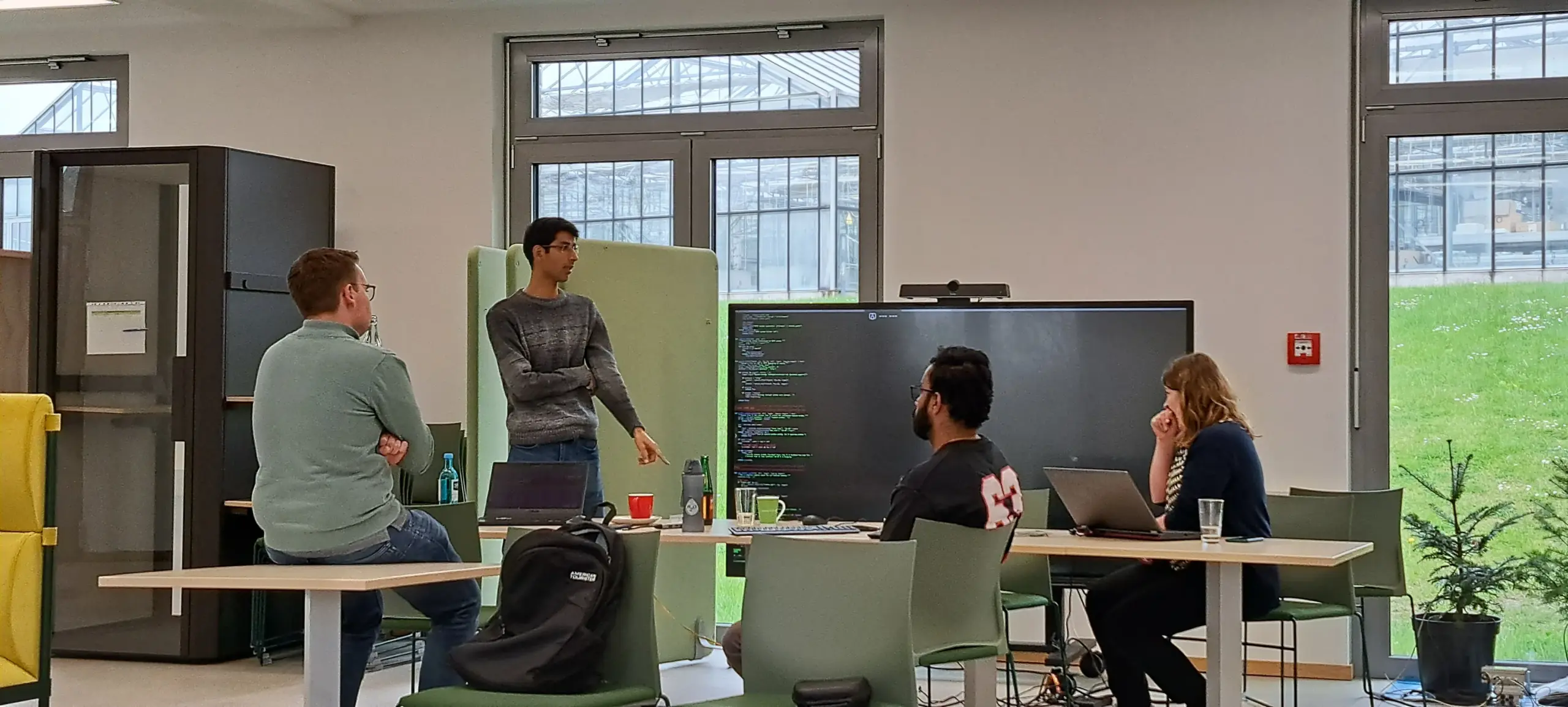
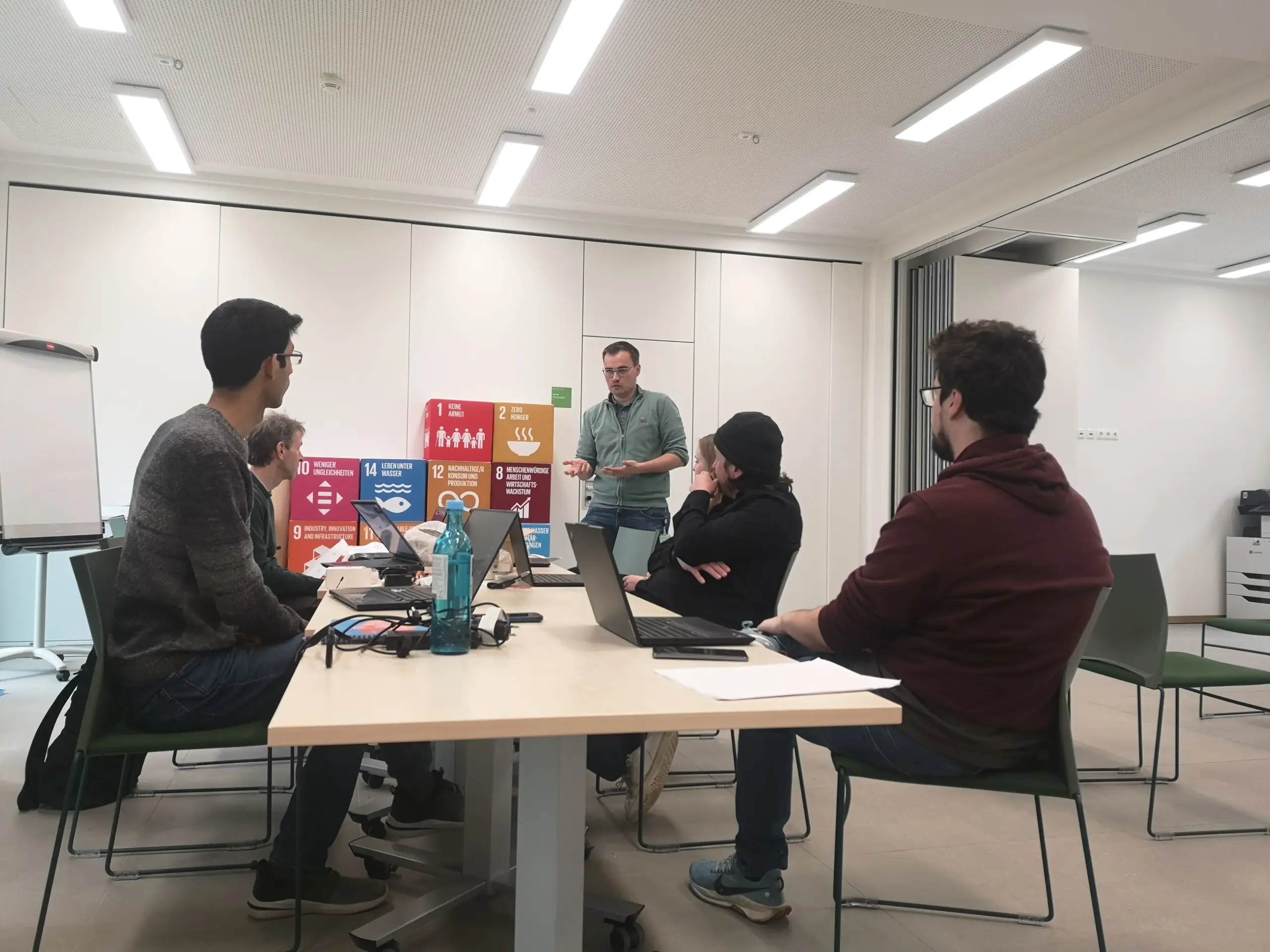
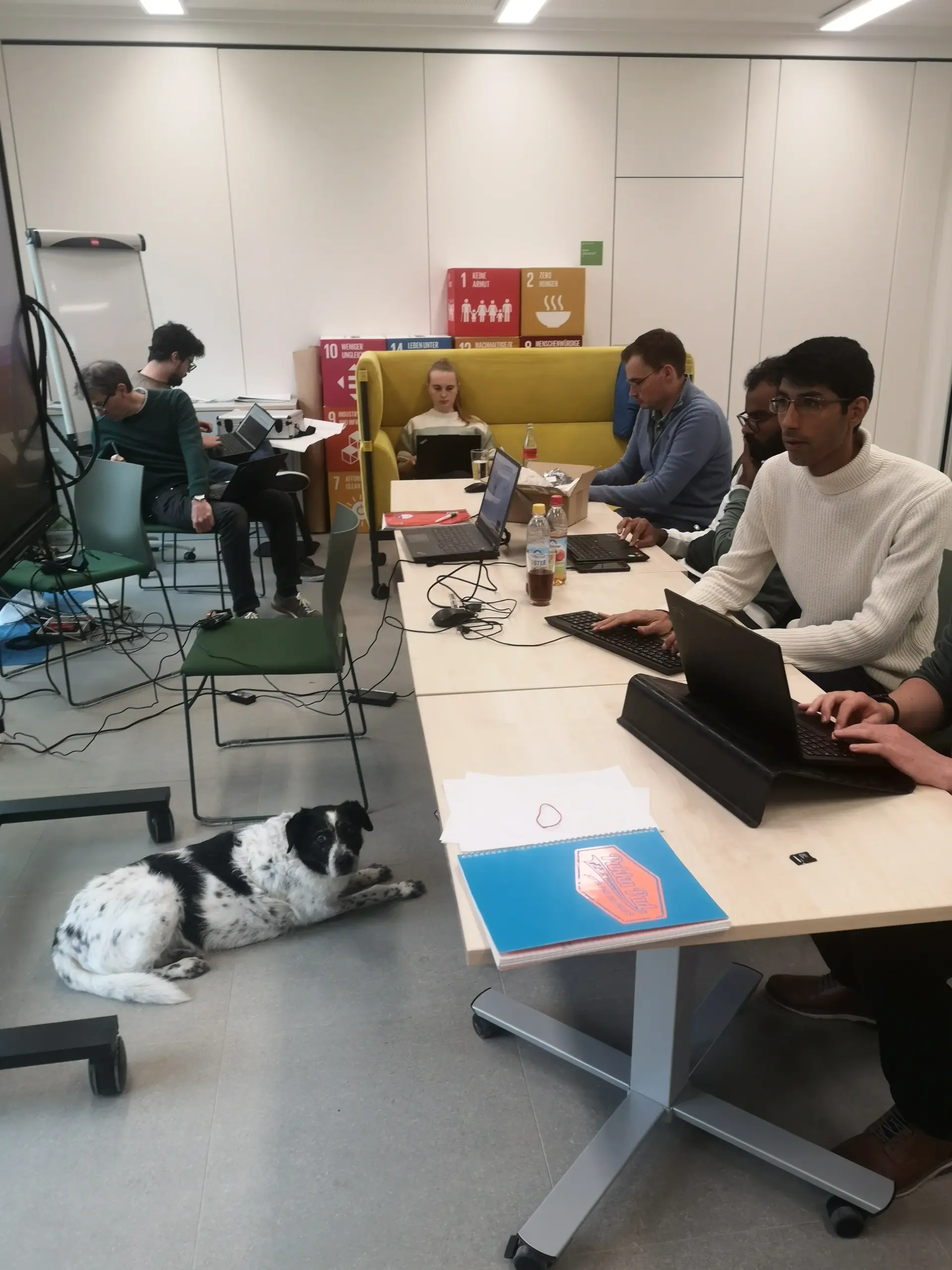
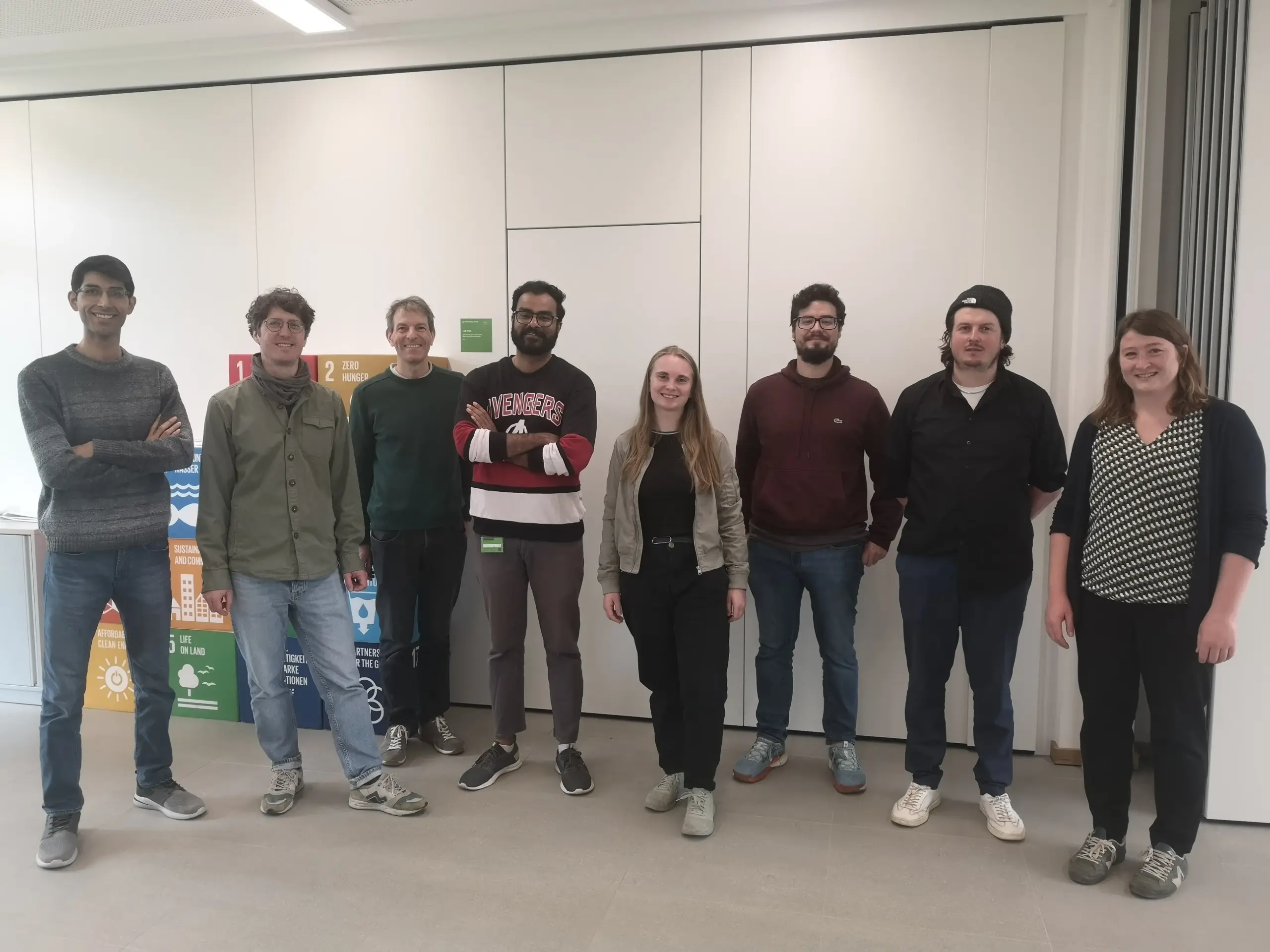
HSWT scientists from the Faculties of Wood and Forestry (group led by Prof. Dr. Christian Zang – Forest and Climate Change) and Sustainable Agricultural and Energy Systems (group led by Prof. Dr. Florian Haselbeck – Smart Farming) came together for two days of cross-faculty, focused collaboration to achieve important progress within the framework of the bayklif2 project SmartReForest.
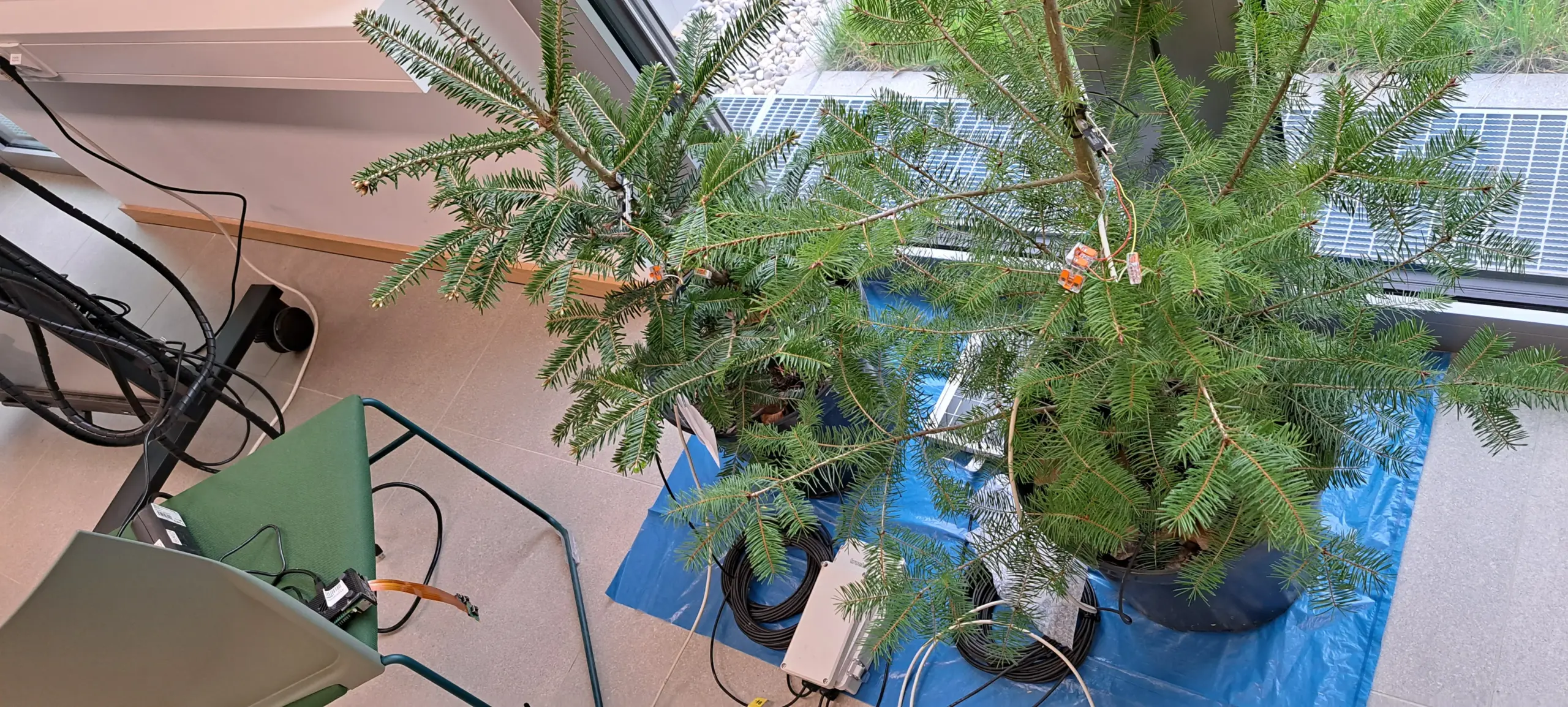
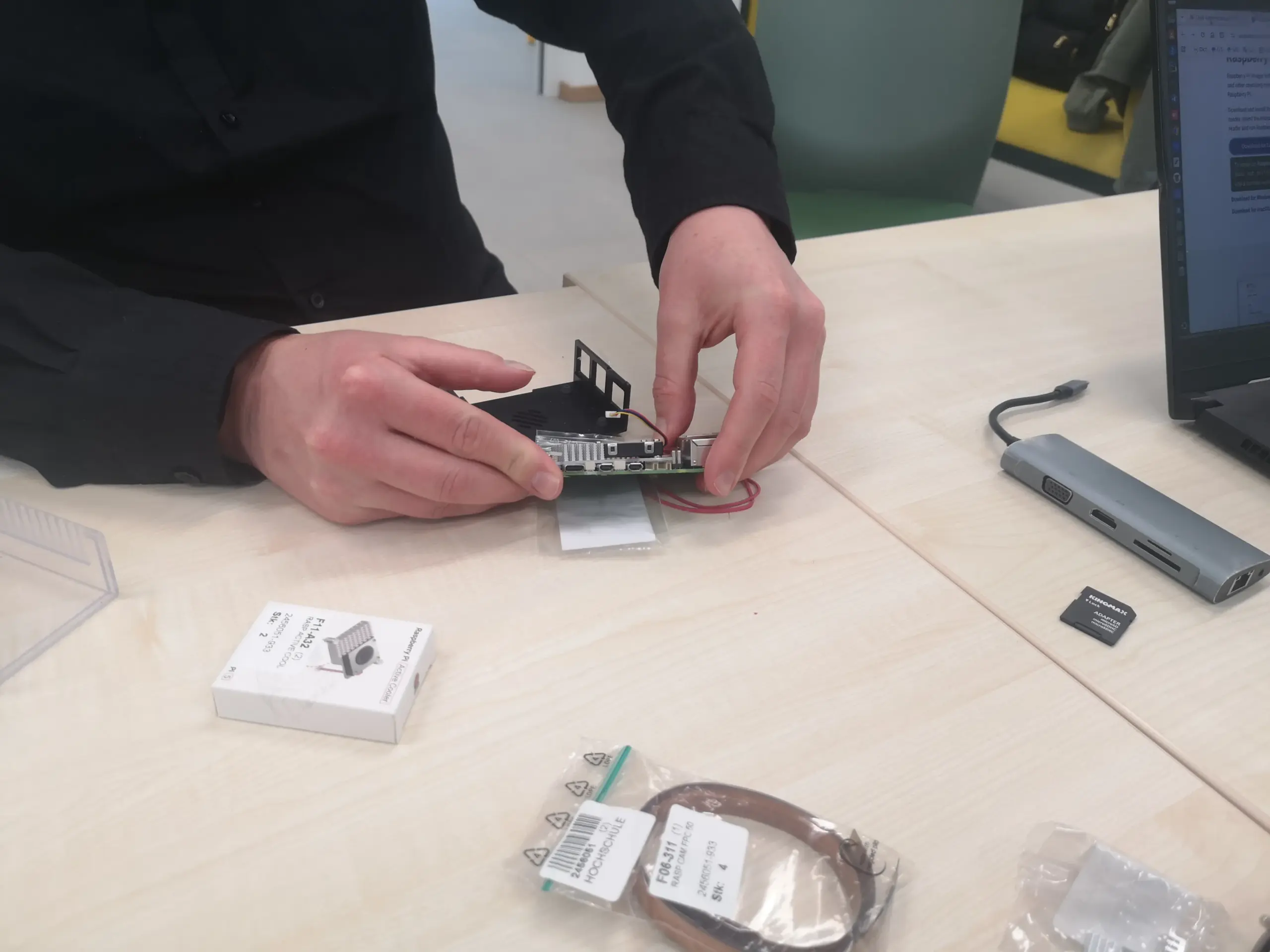
The goal was the automated capture of image data at regular intervals and its collection on corresponding servers. This high-resolution time series of image data will then be used to derive precise irrigation thresholds. To achieve this, a custom-designed “image data platform” based on Raspberry Pi with connected RGB, near-infrared, and thermal cameras was implemented and put into operation. A further objective was the commissioning of market-available IoT sensor technology.
Results after Two Days
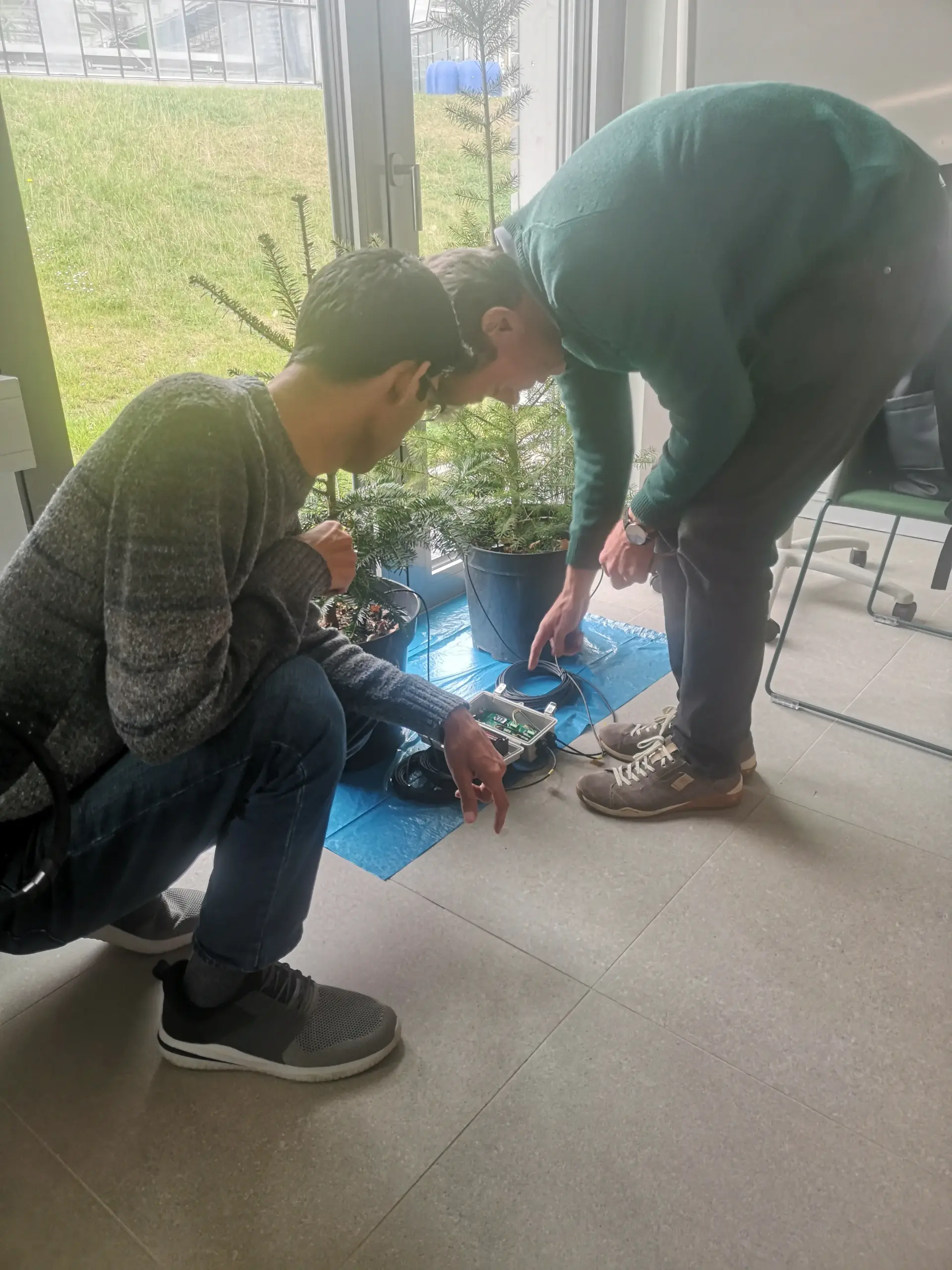
The Raspberry Pi platform is functional, continuously captures image data at regular intervals, stores it locally, and sends an email if problems arise. The image data acquisition is fully automated. The IoT sensor technology has been installed, tested, and is largely operational.
For some final fine-tuning, another one-day hackathon will take place on April 29, during which the thermal camera (delivered by then) will be connected, an alarm function will be implemented, and documentation for users without an IT background will be created. A 3D-printed housing for the proprietary image data platform is currently in development.
Integration into the SmartReForest Project
Sub-project 3 of the project “Smart Solutions for Resilient Reforestation to Secure Essential Ecosystem Services under Climate Change” (SmartReForest) focuses on ensuring the success of reforestation measures. Here, AI-supported monitoring and irrigation systems are being developed based on remote sensing and ecophysiological measurements. The goal is the early detection of drought stress and targeted, efficient water supply to ensure the survival of young plants, avoid pampering effects, and conserve water resources.
In the greenhouse experiments, a total of 100 young plants of a deciduous tree species (European beech) and a coniferous tree species (Douglas fir) are subjected to controlled drying and re-watering. These tree species are typically planted in the Frankenwald study area. From this, irrigation requirement thresholds are derived, and data is conceptualized for AI-based detection of irrigation needs at the individual tree level. The seedlings were potted at the end of March and placed on mobile tables that can be moved outdoors to collect data under field-like conditions and test sensor systems.
Article adapted from https://www.hswt.de/news-list/detail/hswt-hackathon-zur-automatisierten-datenaufnahme-im-projekt-smartreforest | Credit: Gerhard Radlmayr